
AI Cloud Storage: Secure, Scalable, and Smarter Than Ever

In today’s data-driven digital economy, managing vast volumes of information efficiently, securely, and intelligently is critical to operational success. Traditional cloud storage systems offer scalability and convenience, but as data complexity and volume grow exponentially, organizations need smarter solutions. This is where AI cloud storage steps in—revolutionizing how businesses approach data storage, security, and accessibility.
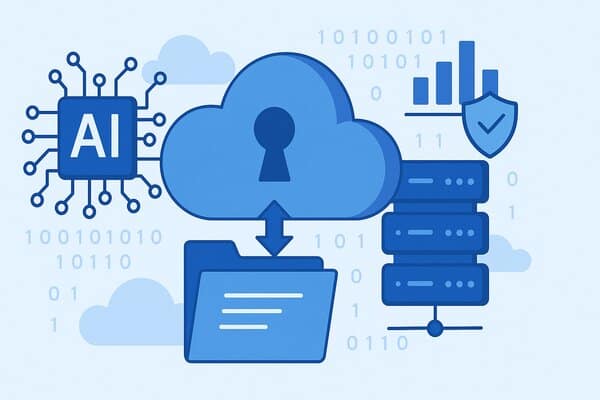
AI cloud storage integrates artificial intelligence directly into the cloud infrastructure, providing capabilities far beyond conventional storage systems. It enables dynamic data handling, predictive analytics, real-time automation, and enhanced security. Whether you’re a digital marketer managing large media libraries, a web hosting agency leveraging Cloudways or WordPress environments, or an enterprise juggling multi-tier data storage across platforms, AI cloud storage offers a smarter way to handle it all.
For those exploring the best cloud data storage options, adopting an AI-driven approach is no longer just an upgrade—it’s a strategic move toward sustainable digital transformation.
What Exactly Is AI Cloud Storage?
AI cloud storage refers to cloud-based storage systems that leverage artificial intelligence and machine learning to enhance functionality, automation, and efficiency. Unlike traditional systems that require manual oversight, AI-enhanced platforms analyze data behavior patterns, automate data lifecycle processes, detect anomalies, optimize storage usage, and even anticipate future storage needs.
These smart systems can automatically classify files, monitor user behavior, detect cybersecurity threats in real-time, and suggest cost-saving storage configurations. AI cloud storage is not only about keeping your data safe—it’s about turning your data into an intelligent asset that adapts to your business needs in real time.
How AI Is Enhancing Cloud Storage Technologies
Intelligent Automation
One of the most powerful benefits of AI in cloud storage is automation. AI can automate complex workflows such as file tagging, classification, migration between storage tiers, and lifecycle management. This reduces manual labor, increases efficiency, and allows IT teams to focus on strategic tasks instead of routine operations.
Predictive Resource Allocation
AI-powered systems can forecast future data usage trends based on historical patterns. These predictions help in dynamic resource allocation—scaling storage capacity on-demand and optimizing bandwidth usage to ensure consistent performance and cost control.
Enhanced Data Security
Security is a top concern in cloud storage. AI improves threat detection by identifying unusual patterns of activity, such as multiple failed login attempts or uncharacteristic data downloads. Machine learning algorithms continuously evolve based on new threats, ensuring your storage remains protected even as attack strategies change.
Improved Data Retrieval and Searchability
AI cloud storage systems use natural language processing (NLP) and semantic search to help users find files faster. Intelligent metadata tagging and contextual understanding allow these systems to deliver highly accurate search results—even when users don’t remember exact file names.
Benefits of AI Cloud Storage for Business Environments
Operational Efficiency
By automating routine tasks, AI cloud storage streamlines operations. This not only saves time but also minimizes errors, leading to higher reliability and reduced downtime. Businesses benefit from faster access to critical data and smoother system performance across platforms.
Cost Optimization
AI continuously monitors storage usage and adjusts resource allocation accordingly. It identifies underutilized assets and shifts them to lower-cost storage classes. For example, older files that are rarely accessed can be moved to archive tiers without manual input, reducing overall cloud storage costs.
Compliance and Risk Management
AI plays a vital role in compliance, especially for industries that handle sensitive data such as healthcare, finance, and legal. AI tools can scan and categorize personal and financial data to ensure adherence to GDPR, HIPAA, and other regulations. Real-time auditing and data lineage tracking further support regulatory readiness.
Scalability and Flexibility
As your business grows, so does your data. AI-enabled storage solutions automatically scale to accommodate new workloads without disruption. Whether it’s a sudden spike in website traffic, a marketing campaign requiring high-res media storage, or expanding user databases, AI ensures seamless scalability.
Industry Use Cases of AI Cloud Storage
Healthcare Sector
Medical facilities are adopting AI cloud storage to handle electronic health records (EHRs), diagnostic images, and patient histories. AI ensures secure data access, maintains HIPAA compliance, and supports predictive analytics for improved patient care.
E-commerce and Retail
Retailers are leveraging AI cloud storage for everything from customer data management to inventory forecasting. AI also plays a role in personalizing shopping experiences by analyzing purchasing patterns and storing user profiles efficiently.
Financial Institutions
Banks and fintech companies use AI storage to monitor transactions, detect fraud in real time, and automate compliance checks. These systems also help manage enormous volumes of historical and transactional data securely and efficiently.
Digital Marketing and Media
For marketers and content creators, AI cloud storage automates metadata tagging, content indexing, and digital asset management. This ensures faster search, streamlined campaign deployment, and efficient collaboration between global teams.
Key Features to Look for in an AI Cloud Storage Solution
Seamless Integration with Existing Systems
Choose AI cloud storage that integrates effortlessly with tools like WordPress, Cloudways, and enterprise CMS platforms. APIs, SDKs, and plugin support are crucial for quick deployment and ongoing adaptability.
Advanced Analytics and Dashboards
Real-time dashboards powered by AI help track usage, predict costs, and analyze storage patterns. These visual insights support smarter decision-making and empower teams to manage data more strategically.
Automated Backups and Recovery
Look for platforms that use AI to automate backup schedules, manage file versions, and initiate recovery protocols during failures. AI ensures business continuity by minimizing data loss and accelerating recovery times.
Data Lifecycle Management
AI enhances lifecycle policies by learning which files should be archived, deleted, or retained based on usage behavior. This keeps your storage organized and avoids unnecessary clutter.
Top Providers of AI Cloud Storage Solutions
Google Cloud Storage with AI
Google integrates machine learning into its cloud storage to provide smart recommendations, intelligent classification, and data labeling tools. Google’s AI tools like BigQuery and AutoML are tightly integrated with its storage system, offering seamless insights.
Amazon S3 and AWS AI Tools
Amazon S3, combined with AI services like Amazon Macie and SageMaker, provides intelligent data classification, anomaly detection, and predictive analytics. Its vast infrastructure supports even the most demanding storage needs.
Microsoft Azure Blob Storage and Cognitive Services
Azure’s AI-backed cloud storage offers real-time threat detection, automatic compliance tracking, and cognitive search capabilities. Its integration with Microsoft Office 365 and Power BI makes it a compelling choice for enterprise users.
IBM Cloud Storage with Watson AI
IBM’s Watson platform brings advanced AI features such as natural language processing, intelligent metadata extraction, and contextual tagging. Its capabilities are well-suited for high-security industries like legal and financial services.
Challenges to Consider When Adopting AI Cloud Storage
Implementation Complexity
Switching to AI cloud storage may require upfront planning and integration efforts, especially for companies with legacy systems. Providers with robust migration support and hybrid solutions can ease the transition.
Cost vs. Value
Although AI-enhanced storage may incur higher initial costs, the long-term ROI through automation, security, and efficiency justifies the investment. Evaluating usage patterns and conducting cost-benefit analyses are essential.
Data Privacy Concerns
Using AI for data analysis raises privacy issues. Businesses must ensure their chosen provider complies with data protection regulations and offers transparent policies regarding AI usage.
The Future of AI Cloud Storage
The next generation of AI cloud storage will include deeper personalization, real-time decision support, and tighter integration with AI-driven business tools. Innovations such as edge AI storage, privacy-preserving machine learning models, and quantum-safe encryption are on the horizon.
As digital infrastructures grow more complex, AI cloud storage will become the nerve center of smart businesses—enabling real-time insights, seamless operations, and data-driven innovation. The storage solutions of tomorrow will not merely store data—they will understand, interpret, and act on it.
Conclusion
AI cloud storage is far more than just a technological advancement—it is a strategic asset for forward-thinking businesses. By combining intelligent automation with secure and scalable infrastructure, it empowers organizations to stay agile, compliant, and efficient in a rapidly changing digital landscape.
Whether you’re running an online store, managing high-traffic websites, or handling sensitive data across regulated industries, AI cloud storage offers the speed, intelligence, and reliability modern enterprises demand. Investing in this technology today means building a smarter, safer, and more scalable digital future.